


The living room is the most versatile space in any home. It's where you spend time with family, watch television, read books and meet friends. The different uses of the space vary throughout the day, so the lighting needs to be flexible. When planning ceiling lighting, you often need to choose between two main types: fixed or directional downlights. Both solutions have their strengths. The right choice depends on the room's architecture, furnishings and the desired atmosphere.
Short answer: fixed for general lighting, directional for accent lighting
The basic rule for choosing relates to how you'll use the light. A fixed downlight works excellently when the goal is even, shadow-free ambient lighting. When the luminaire's beam is directed straight down, the light spreads over a wide area without harsh contrasts. This makes the room bright and spacious.
A directional downlight brings flexibility to the space. It allows the beam to be precisely directed to a specific point, such as an artwork, feature wall, bookshelf or reading corner. The directional capability enables layered lighting and highlighting of particular details.
Modern versatile LED downlights make it possible to use both luminaire types side by side, giving the living room both adequate general lighting and more precise accent lighting.
What's the practical difference between fixed and directional downlights
The practical differences between fixed and adjustable luminaires relate to the luminaire's mechanics, installation method and how the light beam behaves in the space.
In a fixed model, the luminaire body and lens form a fixed unit. The light always directs at a 90-degree angle to the ceiling surface. Thanks to the absence of a mechanical joint, fixed models are usually extremely shallow. Their installation depth is typically around 30–50 millimetres, which makes installation easier in shallow ceiling structures and suspended ceilings.
In a directional downlight, the luminaire's inner ring or light module is articulated. This allows the luminaire to tilt, usually 20–45 degrees, and in many models provides full 360-degree rotation around the horizontal axis. Because of the joint mechanism, the rotating body section usually requires slightly more space in the ceiling structure (around 50–80 mm installation depth), so that the luminaire can rotate freely without touching the vapour barrier or insulation.
Quality recessed LED downlights sit flush in the ceiling. Choosing an adjustable model gives you the option to adjust the light direction even after installation, if the furniture arrangement changes later.
Living room lighting needs and suitable luminaire types
When planning living room lighting, the starting point is dividing the space into different activity zones. The general seating area should ideally have around 100–200 lux (lx). For reading and tasks requiring more precise vision, 300–500 lux is recommended. The right luminaire type in different zones ensures good usability and prevents glare.
- TV and media wall: In the television viewing area, light hitting the screen directly can cause reflections. With a directional downlight, the beam can be turned towards the wall behind the television for soft backlighting. This reduces eye strain between the bright screen and dark room.
- Reading corners and armchairs: At a reading spot, a directional luminaire directs light straight onto the book or magazine without needing to adjust the whole room's lighting to bright.
- Walkways and general space: In the centre of the room and along walkways, fixed downlights provide even, comprehensive light that keeps the space bright without dark spots.
Dimmable lighting is an important feature in a living room. Dimming allows you to adjust the lighting intensity according to the situation, from bright cleaning light to soft evening ambience.
When a directional downlight is the better choice
A fixed luminaire has its place in even general lighting, but in certain situations an adjustable and directional downlight is the most effective solution. Architectural features and the space's surface materials place demands on lighting that a fixed luminaire doesn't meet as well.
Sloped ceilings require directional capability. If a fixed luminaire is installed in a ceiling at a 20 or 30-degree angle, its beam will point diagonally at the opposite wall or into the viewer's eyes. This causes glare and leaves one side of the room dark. With an articulated luminaire, the beam can be corrected to point straight down, so the light falls naturally onto the floor level regardless of ceiling angle.
Another clear application is highlighting vertical surfaces and textures. Feature walls, such as slatted panels, acoustic panels, brick cladding and large artworks come into their own when light is brought close to the wall surface and directed at an angle across it. This brings out the material's form and depth.
Key situations for choosing a directional downlight:
- High and sloped ceilings: Adjusting the light angle ensures even light at floor level without glare.
- Lighting paintings and feature walls: Adjusting the beam directly onto the object brings out the details of art and surfaces.
- Bookshelves and alcoves: Directed light makes it easier to find objects and books without shadows.
Can fixed and directional downlights work together in the same space
Both models work well together, and combining them often produces the best result. In a living room you don't need to stick to just one luminaire type, as long as you follow a consistent line in the luminaires' appearance and the light's technical properties.
To maintain a unified appearance, choose fixed and directional luminaires from the same manufacturer's product family. This ensures the luminaire bezels' design, colour, rim width and finish are identical. The ceiling will look clean even if some luminaires are directed at different angles.
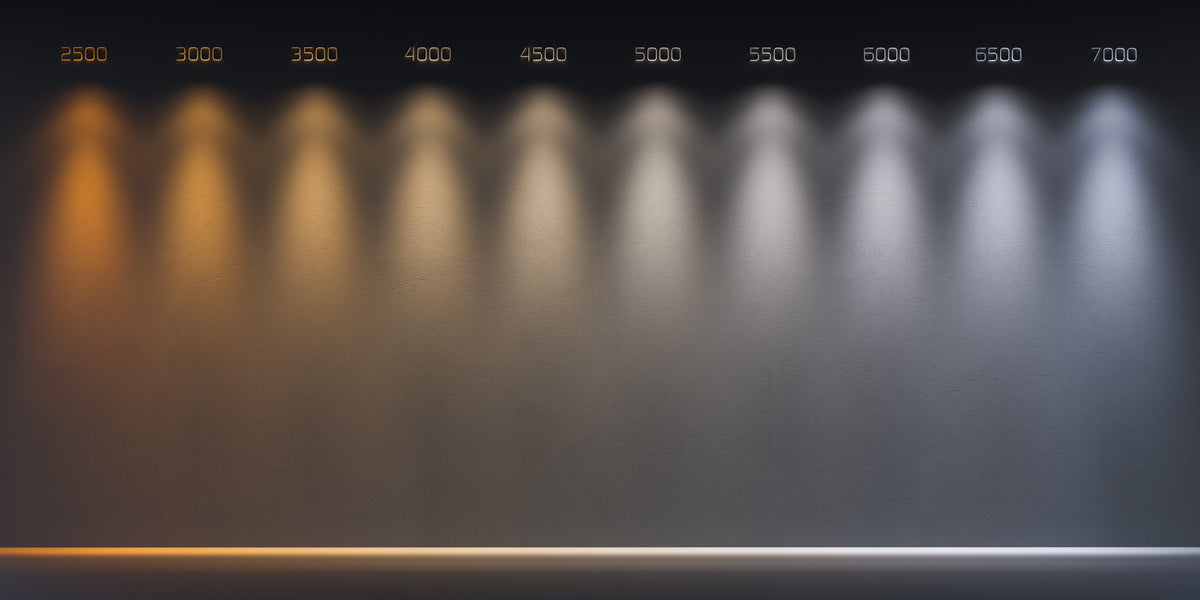
Technically, the most important factors to keep consistent are colour temperature (Kelvin value) and colour rendering index (CRI). If you're using warm 3000 Kelvin light for general lighting, the directional accent lights must also be 3000 Kelvin, so the space's overall appearance remains consistent. Additionally, a high colour rendering index (CRI > 90) ensures that wood surfaces, textiles and artworks appear natural in all lighting groups.
Other living room lighting solutions
Effective living room lighting is built from several complementary layers of light. Whilst downlights form an efficient and clean foundation, the space benefits from combining different light sources.
A functional partner for ceiling luminaires is indirect LED strip lighting. An LED strip installed in the edges of suspended ceilings, pelmet tracks or wall profiles reflects soft light via the surface. This reduces hard shadows and softens the space's atmosphere. When indirect light and point downlights are connected to separate control groups, you can easily change the living room's mood as needed.
Grouping luminaires behind separate dimmers or smart control allows different lighting settings. When watching a film, the general lighting can be switched off, leaving only gently dimmed indirect light and a directional downlight highlighting the feature wall.
Both fixed and directional downlights have a clear role in the living room. A fixed model provides an even foundation for the whole room's general lighting. A directional model brings flexibility for highlighting architecture, sloped ceilings and specific details. By combining these two luminaire types from the same product family and keeping the light's colour temperature consistent, you'll create effective and lasting lighting in your living room.


0 comments