


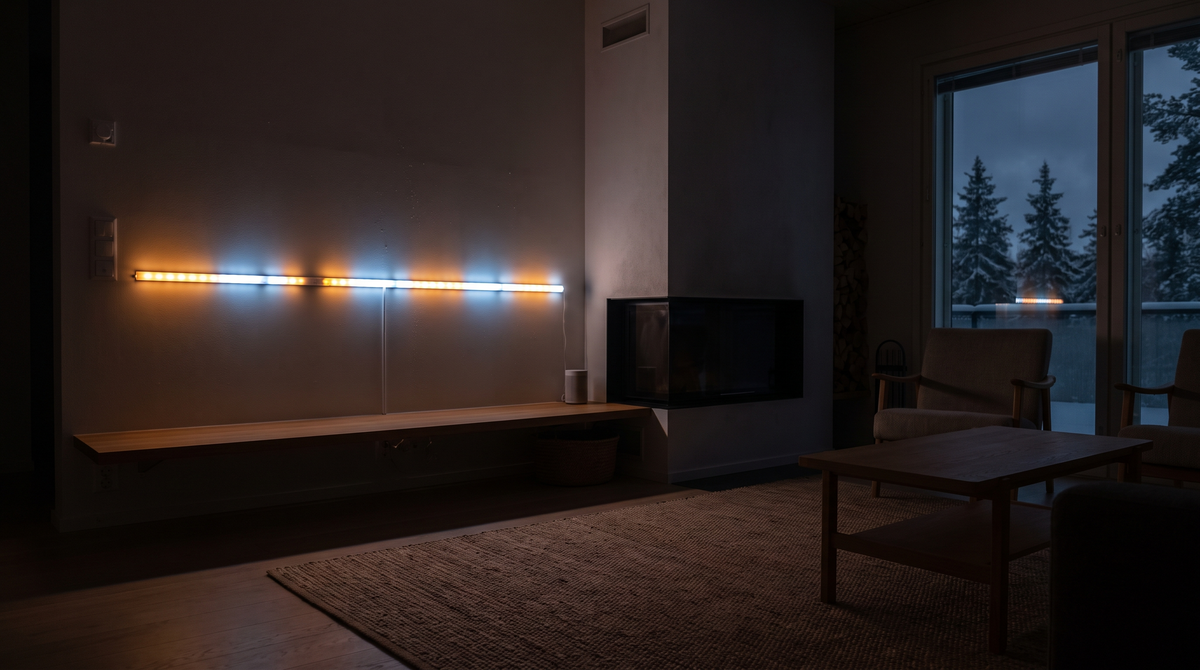
LED Flickering – A Common Problem in European Homes
More and more homes, holiday cottages, and outdoor spaces across Europe are switching to efficient and energy-saving LED lighting. However, instead of creating a warm and inviting atmosphere, LED lights can unexpectedly start to flicker or flash, reducing comfort and potentially straining the eyes. Why do LEDs flicker and how can you solve this issue yourself without unnecessary guesswork?
LED flickering is particularly noticeable in dimly lit rooms during evening hours, when relaxing with family or entertaining guests. Whether you're installing LED strips under kitchen cabinets in London, creating ambient lighting in a French countryside villa, or upgrading outdoor terrace lighting in Barcelona, understanding the root causes of flickering will save you time, money, and frustration.
What Causes LED Lights to Flicker?
LED flickering is rarely a coincidence – there are identifiable technical causes behind it. Whether in your living room, bathroom, garden shed, or outdoor patio, the issue typically stems from the power supply, dimmer switch, controller, or even the wiring itself. The intensity of flickering varies: some people notice it visibly, while others experience it indirectly through headaches or eye fatigue, especially in dim settings and during evening hours.
In many European homes built before LED technology became mainstream, electrical systems were designed for traditional incandescent or halogen bulbs. These older systems may not provide the stable, clean power that modern LED fixtures require. Additionally, voltage fluctuations common in rural areas or older residential districts can exacerbate flickering issues.
Most Common Forms of LED Flickering:
- Rapid flickering: The ambient lighting flickers almost imperceptibly, but prolonged exposure results in noticeable headaches or eye discomfort.
- Disruptive flickering when dimming: Adjusting brightness causes pronounced flickering, especially at lower light settings – a common complaint when dimming LED lights in dining rooms or bedrooms.
- Visible banding on camera: When filming with a smartphone camera, LED strips display clear flickering bands or stripes – a telltale sign of power supply issues that videographers and content creators often encounter.
- Strobing effect: Intermittent flashing that creates a disco-like effect, particularly disturbing in relaxation spaces like bedrooms or reading nooks.
The fundamental cause of flickering is almost always impure power supply, which transfers to the light source and manifests as disturbances in the light output. An incompatible dimmer switch or incorrect power supply is also a frequent source of the problem. In some cases, electromagnetic interference from other household appliances – such as washing machines, refrigerators, or microwave ovens – can introduce noise into the electrical circuit, causing LEDs to flicker intermittently.
Most Common Problem Sources: Dimmers, Power Supplies and Controllers
An LED lighting system typically consists of at least three components: the power supply (driver), a possible dimmer switch, and the light source itself (such as LED strips or panels). Each of these can cause flickering, but tracing the problem requires a systematic approach.
For DIY enthusiasts and homeowners tackling LED installations, understanding which component is responsible can mean the difference between a quick fix and an expensive replacement of the entire system. Many European consumers purchase LED products from various retailers and online marketplaces, often mixing components from different manufacturers – a practice that frequently leads to compatibility issues.
| Problem Source | Most Common Symptoms | Solution |
|---|---|---|
| Dimmer Switch | Flickering mostly at low settings, light turns on/off unevenly | LED-compatible dimmer switch |
| Power Supply (Driver) | Continuous flickering, independent of dimmer use | Flicker-free, quality power supply |
| Controllers | Flickering when changing control settings (e.g., Casambi/DALI/KNX) | Check controller compatibility and firmware updates |
| Wiring/Connections | Intermittent flickering, especially when other appliances are used | Inspect and secure all connections, upgrade wiring if needed |
It's always worth investigating whether flickering occurs in all lights or only at a specific location. For example, LED strip lighting installed on an outdoor terrace may behave differently than a strip in your hallway due to exposure to temperature variations, moisture, or distance from the power source. Similarly, LED downlights in a bathroom might flicker due to humidity affecting connections, while identical fixtures in a dry bedroom work perfectly.
How to Choose the Right Dimmer for LED Lighting
Dimmable LEDs often pose challenges specifically in connection with dimmer switches. Not all dimmers available on the market work seamlessly with all LED fixtures. This situation is particularly pronounced in older European homes or holiday properties where electrical systems vary considerably and may include outdated dimming technology designed for resistive loads like incandescent bulbs.
Traditional phase-cut dimmers (leading-edge or trailing-edge) that worked flawlessly with old-fashioned bulbs often struggle with the low wattage and electronic drivers of LED lights. The result? Flickering, buzzing, limited dimming range, or lights that won't turn on at all at low settings.
Practical Example: Bathroom Indirect LED Lighting
If you're planning to install dimmable LED strip lighting around a bathroom mirror or above a shower area, you must verify that both the power supply and controller support the same dimming method. For instance, DALI and Casambi control systems enable smooth, stepless dimming, but only when using compatible components. Modern IP65-rated dimmable downlights designed for wet environments offer excellent flicker-free performance when properly matched with appropriate drivers and dimmers.
In bathrooms and other moisture-prone areas, choosing fixtures with adequate IP ratings is essential not only for safety but also for preventing flickering caused by moisture ingress into electrical connections.
- Ensure the dimmer is explicitly stated as suitable for LED fixtures – look for labels like "LED compatible" or "for LED and CFL".
- Ask your electrician whether the power supply is designed for dimming technology (e.g., TRIAC, 0-10V, PWM, or DALI).
- Avoid cheap "universal" dimmer solutions, which frequently cause flickering especially at low levels – investing in quality components pays off in long-term comfort.
- Check the minimum load requirement of your dimmer – many require a certain minimum wattage to function properly, and energy-efficient LEDs may fall below this threshold.
- Consider smart dimming solutions that communicate digitally with LED drivers, eliminating many compatibility issues associated with analog dimming methods.
For outdoor and garden lighting projects, such as illuminating pathways, terraces, or pergolas with weatherproof LED strips, ensure that all components including dimmers and power supplies are rated for outdoor use and can handle temperature fluctuations common in European climates.
Technical Tips for Preventing LED Flickering
Installation and Planning Checklist for Flicker-Free LED Lighting
- Select a power supply specifically designed for LED use with sufficient capacity for your planned load. Always add a 20% safety margin to your calculations – if your LED strips consume 50W total, choose at least a 60W power supply. Underpowered drivers are a leading cause of flickering and premature failure.
- Verify that your dimmer supports LED technology and uses the correct dimming method (e.g., DALI, Casambi, 0-10V, or PWM). When upgrading from traditional to LED lighting, replacing the old dimmer switch is usually necessary, not optional.
- Install the power supply in a protected location away from moisture and heat. In outdoor and wet room installations, this requires special attention – even weatherproof enclosures should allow adequate ventilation to prevent overheating, which can cause flickering and shorten driver lifespan.
- Use sophisticated control systems like DALI or Casambi when possible for better dimming stability. These digital protocols provide precise control and eliminate many flickering issues inherent in analog dimming methods. They're particularly valuable in whole-home lighting systems where consistency matters.
- Carefully check polarity and wire condition at all connections, especially in outbuildings, gardens, and older properties. Corroded connections or reversed polarity can cause erratic behavior including flickering. Use appropriate waterproof connectors for outdoor installations.
- Keep LED strips and their power supplies on dedicated circuits where possible. Sharing circuits with high-draw appliances like washing machines or electric heaters can introduce voltage fluctuations that manifest as flickering.
- Consider power quality in your location. Rural areas or regions with aging electrical infrastructure may experience voltage sags and surges. Installing a voltage stabilizer or surge protector can help maintain consistent LED performance.
- Match components from reputable manufacturers known for compatibility. While mixing brands isn't always problematic, staying within one manufacturer's ecosystem often ensures components are tested together and work harmoniously.
Quality and Color Rendering Affect User Comfort
Flicker-free LED lighting doesn't only mean the light doesn't visibly flash – light quality and color rendering index (CRI) also significantly impact comfort and eye-friendliness. High-quality LED products, such as dim-to-warm downlights, produce consistent and natural light without disturbing flicker throughout their entire lifespan, while also adjusting color temperature to create warmer tones at lower brightness levels – mimicking traditional incandescent dimming behavior.
CRI values above 90 are recommended for living spaces, kitchens, and anywhere color accuracy matters – such as dressing rooms, art display areas, or home offices. Poor CRI combined with flickering creates particularly uncomfortable lighting that can affect mood, productivity, and even circadian rhythms.
For European consumers concerned about health and wellbeing, understanding that flicker-free operation extends beyond visible flickering to include high-frequency flicker (detectable only by sensitive equipment but potentially affecting some individuals) is important. Look for products specifically marketed as "flicker-free" or with ratings below 5% flicker percentage.
Common Mistakes That Cause LED Flickering
- A single power supply has been undersized for multiple LED strips used together. For example, running three 5-meter LED strips rated at 14W/m on a 150W power supply might seem adequate mathematically (210W needed), but doesn't account for voltage drop, startup surges, or safety margins.
- Mixing components from different manufacturers without verifying compatibility (e.g., one brand's dimmer with another's power supply). While this sometimes works, it's the most common cause of flickering complaints in DIY installations.
- Installing non-dimmable LED products with dimmer switches. Always check product specifications – attempting to dim non-dimmable LEDs inevitably causes flickering, buzzing, or complete failure.
- Using LED bulbs or strips rated for 230V directly on dimmer circuits designed for 12V or 24V systems, or vice versa.
- Exceeding maximum cable run lengths for low-voltage LED strips, causing voltage drop that manifests as flickering and dimming toward the end of the run. For 24V LED strips, runs exceeding 5 meters typically require power injection at multiple points.
- Installing indoor-rated components in outdoor or high-humidity locations where moisture infiltration causes intermittent connections and flickering.
- Neglecting to update firmware on smart controllers and dimmers – manufacturers frequently release updates that improve compatibility and reduce flickering with newer LED products.
When to Call a Professional Electrician
While many LED flickering issues can be resolved through component upgrades or simple adjustments, some situations require professional expertise. If you've systematically checked power supplies, dimmers, and connections but flickering persists, the problem may lie in your home's electrical panel, grounding system, or overall power quality.
Licensed electricians can measure voltage stability, check for neutral wire issues (a common problem in older European homes), and identify whether flickering is caused by external factors like neighborhood-wide power quality issues or internal factors like failing circuit breakers or inadequate grounding.
Additionally, regulations regarding electrical work vary across European countries. In many jurisdictions, modifications to fixed wiring must be performed by certified electricians to comply with building codes and maintain home insurance validity.
Future-Proofing Your LED Installation
When investing in LED lighting for your home, consider not just immediate needs but future flexibility. Choosing quality, dimmable components from the start – even if you don't plan to use dimming immediately – provides options as your needs evolve. Systems supporting standard protocols like DALI or Casambi can integrate with smart home ecosystems, allowing voice control, scheduling, and scene programming.
For decorative and accent lighting using RGB LED strips, ensure controllers support smooth color transitions and sufficient update rates to prevent visible stepping or flickering during color changes. Quality RGB controllers with higher PWM frequencies (above 1000Hz) provide flicker-free operation even when captured on camera.
Energy efficiency, long lifespan, and design flexibility make LED lighting an excellent investment for European homeowners. By understanding and preventing flickering from the outset, you'll enjoy all the benefits of LED technology without the frustration of poor lighting quality. Whether renovating a period property in Prague, building a new home in Amsterdam, or upgrading a vacation cottage in the Alps, attention to component compatibility and quality ensures years of comfortable, flicker-free illumination.


0 comments